What IP66 actually means
The two digits describe what the casing keeps out. The first, 6, is the highest dust rating there is: the enclosure is dust-tight. The second, 6, means it withstands powerful water jets from any direction. In practice that is what lets an IP66 inverter live on an outside wall, in a car port or an open utility space, instead of needing a protected indoor room.
Single phase or three phase
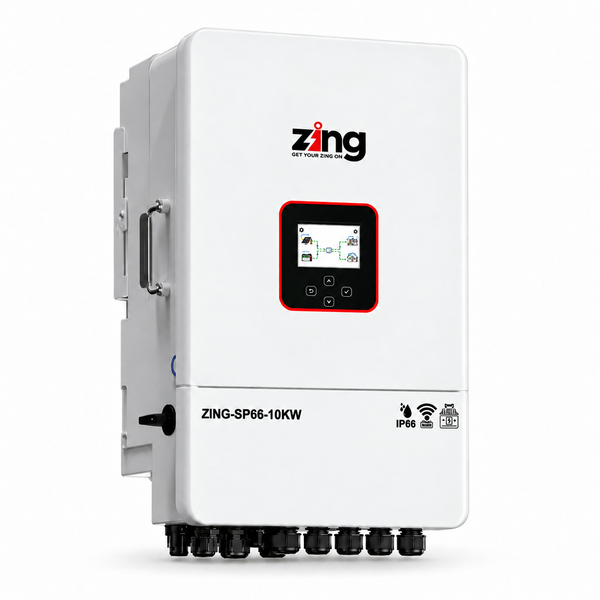
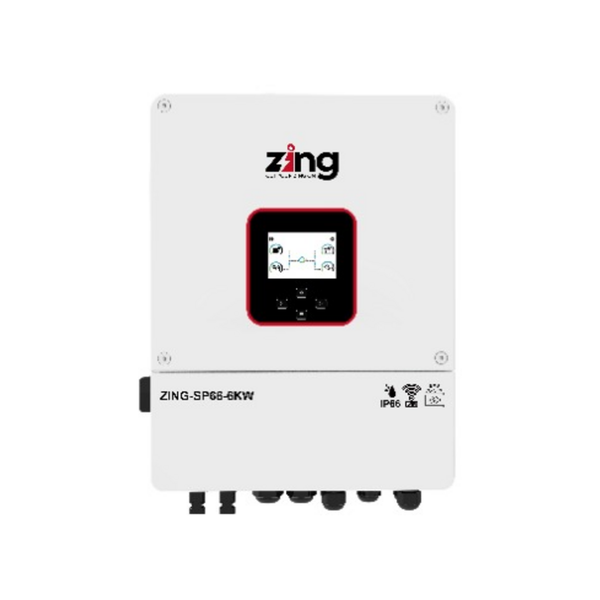
The 6KW, 8KW and 10KW models are single-phase, for homes and small businesses on a standard connection. Each runs dual MPPT trackers over a 150-425V operating range and works with both lithium and lead-acid banks at 40-60V.
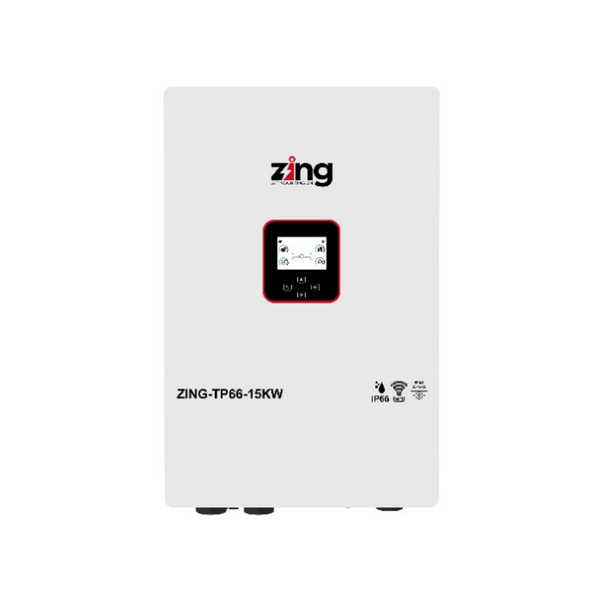
The 12KW and 15KW models are three-phase, for larger homes and commercial sites. They accept up to 1,000V of PV input across a 200-800V MPPT range, which allows longer panel strings.
Matching the inverter to your array
Size to your solar array as well as your load. The 6KW accepts up to 12,000W of PV, the 10KW up to 20,000W, and the 15KW up to 30,000W. Battery charging current rises with capacity too, from 190A on the 8KW to 280A on the 15KW.
If the inverter will be installed indoors or under shelter, the IP54 range covers the same output levels at a lower price.